
Many people now assume that because humanity has repeatedly overcome difficult engineering obstacles, there are effectively no limits to what future technology can accomplish.
This assumption has become so widespread that questioning it often produces reactions remarkably similar to questioning matters of religious faith.
This article is not an argument against imagination... quite the opposite.
Imagination remains one of humanity's greatest strengths.
The ability to envision technologies that do not yet exist has repeatedly driven scientific discovery.
Without imagination, there would be no airplanes, no satellites, no computers, and no space exploration.
The issue arises when imagination evolves into belief.
Science fiction has always invited us to ask, "What if?" Increasingly, however, many audiences have begun replacing that question with "It will happen eventually." The difference between those two statements is enormous.
One is curiosity.
The other is faith.
Engineering and Physics Are Not the Same Thing
Perhaps the greatest misunderstanding surrounding speculative technology is the failure to distinguish between engineering and physics.
Engineering exists to solve problems.
Physics determines whether those problems can be solved at all.
This distinction is rarely discussed outside scientific circles, yet it lies at the heart of virtually every debate about futuristic technology.
Suppose someone proposes constructing a bridge across the Atlantic Ocean. The project would be unimaginably expensive, technologically daunting, and likely impractical. Nevertheless, nothing in the known laws of physics prevents such a structure from existing. The obstacles are engineering, economics, materials science, and logistics.
Now consider a perpetual motion machine - one capable of producing unlimited energy without consuming fuel.
No amount of engineering can make such a machine work because it directly violates the First and Second Laws of Thermodynamics.
The problem is not insufficient technology. The problem is that the universe itself does not behave that way.
These two ideas belong in entirely different categories.
One is difficult.
The other appears fundamentally impossible.
Yet discussions about science fiction frequently place both into the same basket.
Warp drives, artificial gravity, transporters, reactionless propulsion systems, time travel, faster-than-light communication, and limitless energy sources are often defended using exactly the same reasoning that once applied to heavier-than-air flight or reusable rockets.
This comparison ignores a crucial difference.
Airplanes never contradicted physics... Warp drives, as we know them... do.
The Wright Brothers Didn't Rewrite Nature
Whenever impossible technologies are questioned, one historical example almost always appears.
"People once said humans would never fly."
The statement is repeated so frequently that it has become something of a universal rebuttal against scientific skepticism.
Unfortunately, it rests upon a misunderstanding of history.
Human flight did not become possible because scientists eventually overturned gravity. It became possible because engineers learned how lift, drag, thrust, and stability interact within Earth's atmosphere. Birds had already been flying for millions of years.
The laws governing aerodynamic lift existed long before the Wright brothers arrived at Kitty Hawk.
They did not discover new physics.
They discovered new engineering.
The same principle applies to nearly every revolutionary technology in human history.
Electricity did not require rewriting Maxwell's equations.
Semiconductors did not overturn quantum mechanics.
Jet engines did not eliminate conservation of momentum.
Spacecraft do not ignore Newton's Third Law.
Every successful invention has represented a deeper understanding of how nature already works—not evidence that nature's rules eventually disappear.
This distinction is profoundly important because it demonstrates that technological progress has never been about defeating physics. It has always been about learning to operate within its boundaries.
Nature has remained astonishingly consistent.
Our understanding has improved.
Those are not the same thing.
"They Said It Was Impossible"
Closely related to the Wright brothers argument is another familiar phrase.
"They said it couldn't be done."
Who exactly is "they"?
The phrase rarely refers to physicists.
More often than not, "they" represents journalists, politicians, philosophers, or simply popular opinion. History is filled with confident predictions made by people with little scientific understanding.
Science itself operates differently.
Scientists rarely declare that something will never happen. Instead, they evaluate evidence and develop mathematical models describing reality as accurately as possible.
When physicists state that faster-than-light travel appears impossible, they are not expressing personal pessimism.
They are describing the consequences of Einstein's theory of relativity, a theory that has survived more than a century of experimental testing with extraordinary precision.
Could relativity eventually be replaced by a more complete theory?
Absolutely.
Science welcomes better explanations whenever evidence demands them.
However, replacing a theory requires evidence—not optimism.
This distinction is often overlooked.
Many science fiction enthusiasts respond to current physical limitations by assuming that entirely new laws of nature will eventually emerge to permit whatever technology they happen to find appealing. The assumption itself becomes the argument.
There is no supporting evidence.
Only confidence.
And confidence, by itself, has never been part of the scientific method.
Has Science Fiction Become Religion?
When Belief Replaces Physics
By Danny Alex
For nearly a century, science fiction has inspired generations of scientists, engineers, inventors, and dreamers.
Long before humanity built reusable rockets, handheld computers, or artificial intelligence capable of holding conversations, writers imagined worlds where such technologies were commonplace.
Countless engineers have credited Star Trek, 2001: A Space Odyssey, and countless other works of science fiction as the inspiration that first sparked their curiosity about science.
Science fiction has unquestionably helped shape the modern world.
However, somewhere over the past several decades, something subtle but significant has changed.
Many people no longer view science fiction simply as speculative storytelling.
Instead, they have begun treating its impossible technologies as inevitable future realities.
Any suggestion that a particular idea violates the known laws of physics is often dismissed with a remarkably familiar response.
"We'll figure it out someday."
At first glance, the statement appears optimistic.
Human history is filled with examples of extraordinary technological achievements that once seemed impossible. Flight, nuclear energy, space travel, computers, the internet, and artificial intelligence all transformed from fantasy into everyday reality within surprisingly short periods of time.
The problem is that these examples are almost always misunderstood.
None of those technologies violated the laws of physics.
Not one.
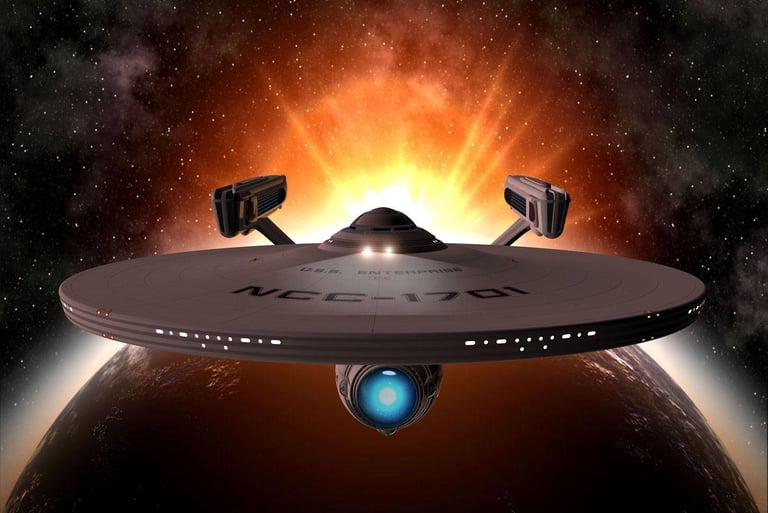
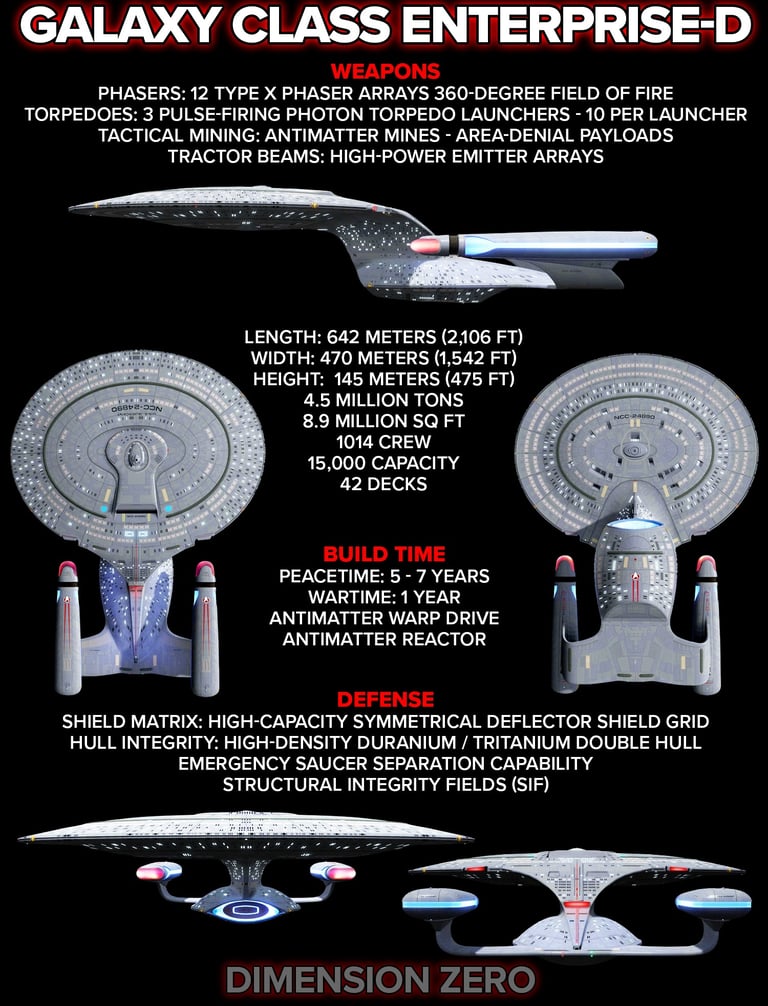
TECHNOLOGY DEVELOPS WITHIN THE LAWS OF PHYSICS
Every major technological breakthrough throughout history has succeeded precisely because it operated within nature's existing rules.
The Wright brothers did not eliminate gravity.
Nuclear reactors did not rewrite thermodynamics.
Computers did not overturn electromagnetism. Engineers solved incredibly difficult problems, but they never changed the fundamental architecture of the universe.
Today, however, discussions about science fiction increasingly blur the distinction between engineering challenges and physical impossibilities.
JUNE 15, 2026
Contact
Reach out for collaborations or questions.
Phone
Support@DimensionZero.Space
© 2026 All rights reserved.